
You buy a bag of salad, a bunch of bananas, some fresh herbs. You have great intentions. And then, a few days later, you open the fridge to find a soggy, browning mess. Sound familiar?
This is one of the most common frustrations for people trying to eat more whole foods. And honestly, it’s not a willpower problem. It’s a storage problem. A few simple changes to where and how you store your produce can make a significant difference to how long it stays fresh.
Here’s what you need to know.
First, Location Is Everything
The single biggest factor in how long produce lasts is where you put it. Not everything belongs in the fridge.
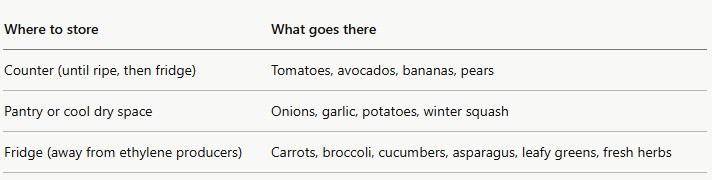
Some fruits are sold before they’re fully ripe, and they need to sit on your counter first. Refrigerating them too early can actually stop the ripening process and affect the texture. Tomatoes, avocados, bananas, and pears all do better on the bench until they’re ready to eat. Once ripe, move them to the fridge and eat within a couple of days.
Then there’s a group of vegetables that don’t belong in the fridge at all. Onions, garlic, potatoes, and winter squash need a cool, dry spot like a pantry or cupboard. Fridge moisture changes their texture and flavour in ways you won’t enjoy.
Everything else? Into the fridge it goes, especially anything that’s already ripe or has been cut.
The Gas You’ve Never Heard Of
Here’s something most people don’t know: fruits and vegetables release a natural gas called ethylene as they ripen. The riper the produce, the more gas it puts out, and that gas causes nearby produce to ripen faster too.
This means storing the wrong items next to each other can quietly accelerate spoilage across your whole fruit bowl or crisper drawer.
Apples, pears, avocados, peaches, apricots, bananas (when ripe), and tomatoes are all high ethylene producers. Keep them away from anything ethylene sensitive, which includes carrots, broccoli, cucumbers, asparagus, leafy greens, herbs, and squash.
A practical fix: use separate crisper drawers. Put your ethylene producers in one drawer, bagged, and your sensitive vegetables in another. Cold temperatures help slow the whole process down.
A Quick Reference to Keep It Simple
The Bigger Picture
Eating well is already a daily effort. Losing expensive produce to poor storage just adds unnecessary friction to the process. Getting this right means less waste, less money out the window, and a fridge that’s actually useful when you open it.
Small habit, real payoff.
Thinking about what else might be getting in the way of eating well consistently? Is coaching right for me?