
- A recent large study (published in 2025) found that people who followed a Mediterranean-style diet plus modest calorie reduction (about 600 fewer calories/day), moderate exercise and professional weight-loss support had 31% lower odds of developing type 2 diabetes over about six years, compared with those who just followed the diet without the extra supports. Harvard Public Health+2Drugs.com+2
- On average, participants in the intervention group lost around 3.3 kg and trimmed about 3.6 cm off their waistline, vs minimal changes in the control group. Harvard Public Health+1
- The “Mediterranean diet” here means eating lots of fruits, vegetables, legumes, whole grains, nuts, and healthy fats (like olive oil); moderate amounts of fish, dairy and lean protein; and little red/processed meat. Harvard Public Health+2Drugs.com+2
🔬 Why it works — what we understand about the mechanisms
- Reviews summarising decades of research show that high adherence to a Mediterranean-style diet is linked to significantly lower risk of developing type 2 diabetes, better blood-sugar control (lower fasting glucose and HbA1c), and improved cardiovascular risk factors.
- The benefits are likely driven by a combination of factors:
- High fibre, micronutrients, antioxidants and healthy fats (especially monounsaturated fats from olive oil, nuts, etc.) support better insulin sensitivity and reduce inflammation. PubMed+2PubMed+2
- The diet helps manage weight and waist circumference — two big risk factors for insulin resistance and type 2 diabetes. Harvard Public Health+1
✅ What this means — how you might translate it into daily habits
- It’s not just about eating “Mediterranean-style” food — combining that with calorie awareness, regular physical activity, and support/accountability seems to make the difference.
- Simple core behaviors:
- Base meals around plants (veggies, fruits, legumes, whole grains, nuts)
- Use olive oil or other healthy fats rather than butter or saturated-fat heavy dressings
- Choose fish, poultry or plant-protein over red/processed meats, and limit processed foods/sugars
- Keep an eye on portions or overall calorie load, especially if weight or waist circumference is a concern
- Stay physically active — gentle to moderate regular activity helps
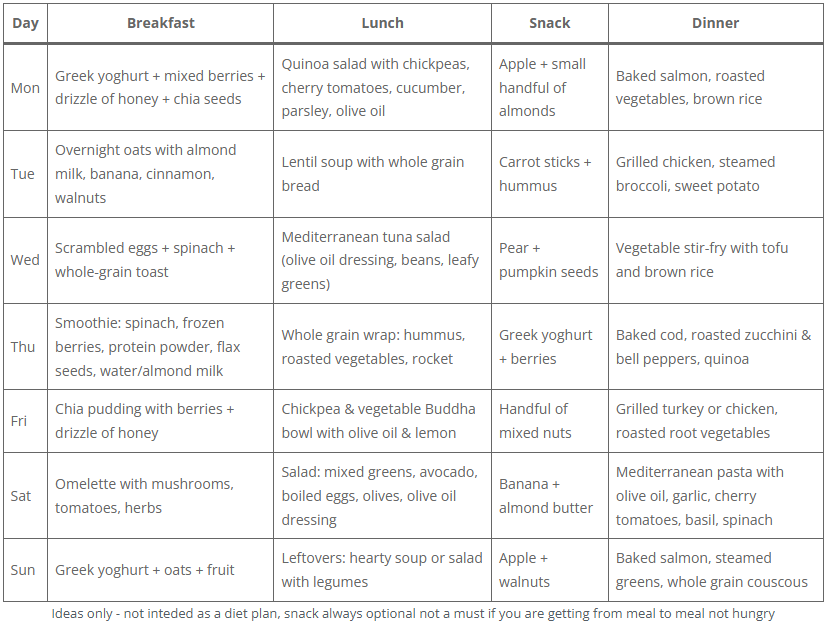
Sample Weekly Meal Outline: More ideas here
Lifestyle & Movement Add-ons
- Daily: 20–30 mins brisk walk or moderate cardio
- 2–3x/week: Resistance training or bodyweight exercises
- Optional: 1–2 sessions of yoga or mobility work
- Mindful habits: eat slowly, focus on food, track portions if aiming for weight control
- Support: buddy system, coaching, or journaling to maintain consistency
Tips for Success
- Prep ahead: batch cook grains, legumes, and roasted veggies
- Swap freely: fish for chicken, quinoa for brown rice, berries for any fruit in season
- Keep it colourful: aim for 3–4 different coloured vegetables on your plate
- Moderation, not perfection: occasional treats are fine
- Track waist circumference: a simple metric for metabolic risk beyond weight
Need more help? Hit this link to find out more about my nutrition coaching packages. Or let’s have a chat here by booking in here.